Key takeaways from our insurance event with Send
Key takeaways from Vega IT and Send's industry event on the future of insurance data exchange.
Over the years, the insurance industry has invested heavily in digital transformation. Brokers have digitised submissions, insurers have modernised underwriting processes, and market initiatives such as ACORD, Blueprint Two, and ADEPT have established common standards for exchanging information.
Yet the market continues to face the same challenge.
Data still moves across a fragmented ecosystem of brokers, insurers, MGAs, and service providers, each operating with different systems, processes, and levels of digital maturity. While some organisations exchange structured data seamlessly, others still rely on emails, PDFs, and manual workflows.
The result is often an ecosystem where information is constantly being reformatted, interpreted, and re-entered before an underwriting decision can even begin.
The challenge is no longer how to make every organisation work in the same way. It is how to enable organisations with different technologies, operating models, and digital capabilities to collaborate efficiently.
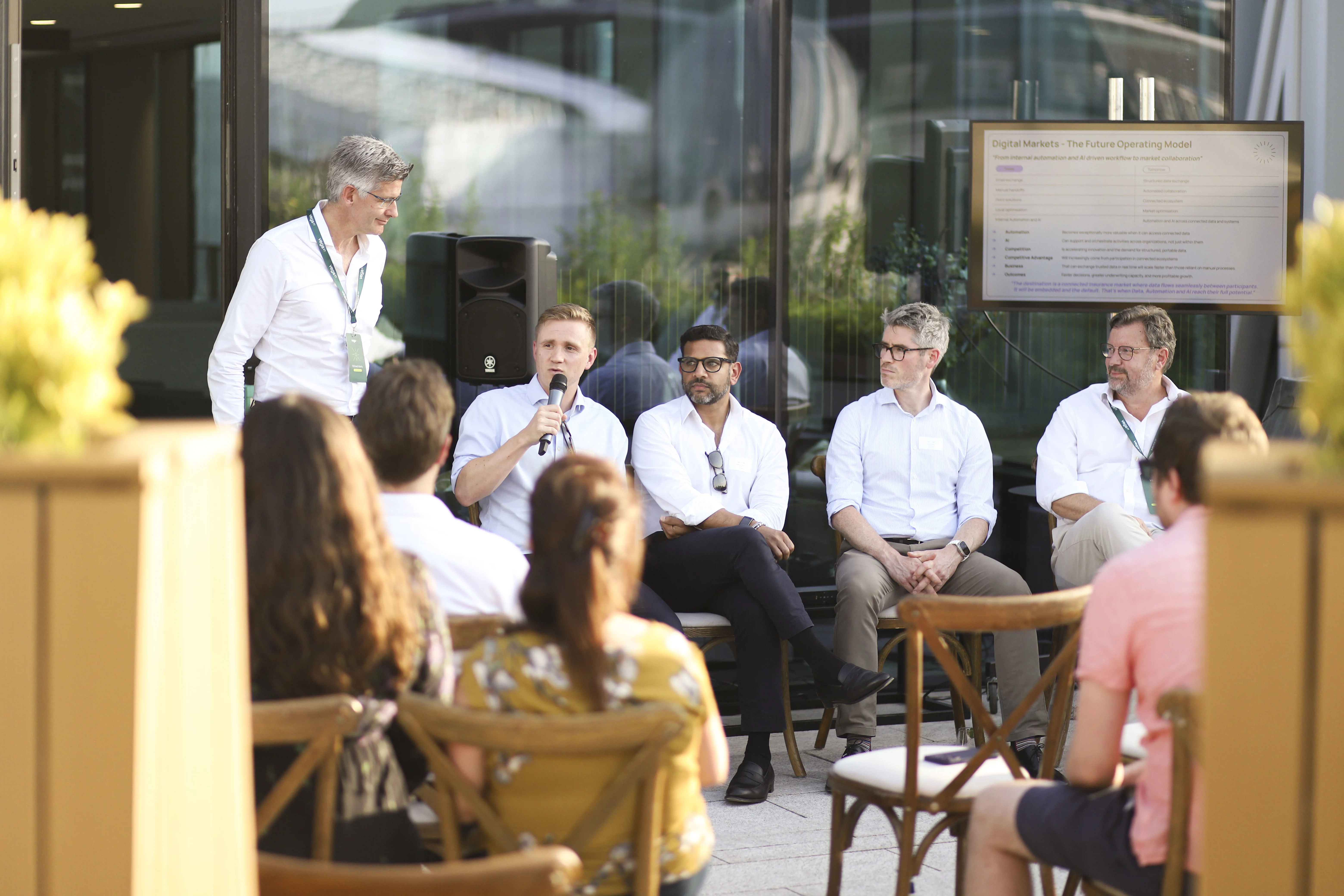
That was the focus of The Great Shift: Transforming Broker–Underwriter Collaboration in a Digitally Diverse Market, held in London on 24 June and hosted by Vega IT and Send.
Bringing together Paul Hiler from Howden, Raoul Carlos from Torch Underwriting, Lloyd Peters from Send, and me, the discussion explored how interoperability, connected data, automation, and AI are reshaping collaboration across the insurance value chain.
Rather than presenting technology as the answer to every challenge, the discussion highlighted something more fundamental: the future of insurance depends on flexible connections between organisations, not simply more standards.
Fragmentation isn't the problem. Working around it is.
For decades, the market has pursued greater standardisation, hoping that common data models and shared frameworks would simplify collaboration.
While these initiatives have undoubtedly moved the industry forward, fragmentation remains a permanent characteristic of the insurance market.
Different classes of business, different operating models, different technology stacks, and different commercial relationships mean that diversity is not an exception – it is how the market operates.
Paul Hiler from xTrade at Howden explained that this is particularly evident in the wholesale and speciality insurance market, where data often passes through multiple organisations before a policy is placed. Every participant depends on receiving accurate, timely, and usable information, yet each may manage and consume it differently.
This is gradually changing the role of brokers themselves.
Rather than simply moving information between parties, brokers are increasingly becoming custodians of data, responsible for ensuring that information remains accurate, complete, and usable throughout the placement process.
One of the most interesting observations from the discussion was that the market's challenge is not a lack of standards. Standards already exist. The real issue is inconsistent adoption.
Instead of trying to eliminate fragmentation, the industry needs technologies capable of working across it.
This is where AI introduces an important shift. Rather than requiring every organisation to adopt identical processes or systems, AI can increasingly translate information, connect workflows, and support decisions across different environments, making interoperability more achievable than standardisation alone.

Better underwriting starts with better information
While much of the conversation focused on technology, the panel repeatedly returned to a simple point: technology should improve underwriting, not redefine it.
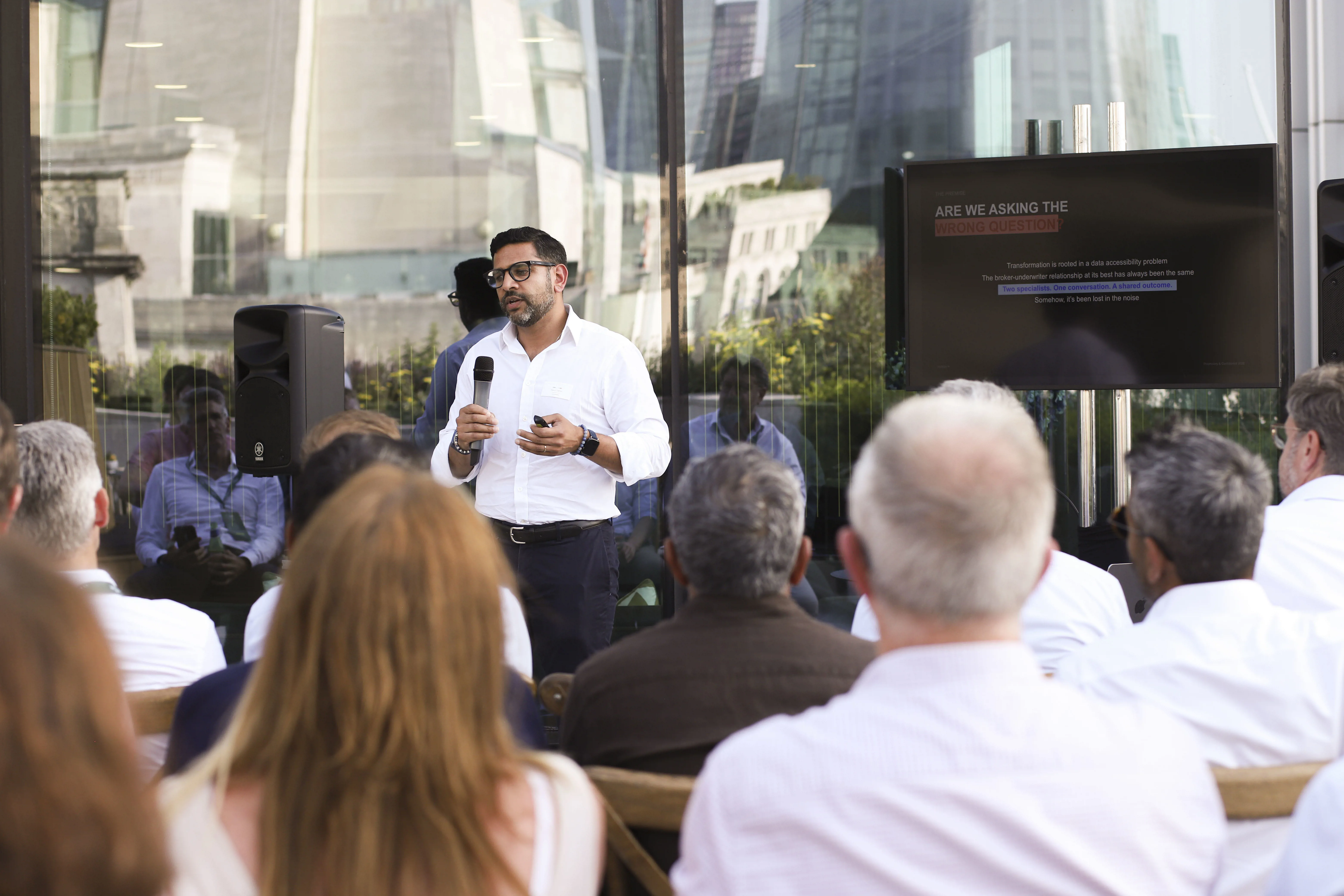
Raoul Carlos from Torch Underwriting argued that the broker-underwriter relationship itself has never been the industry's problem. The real challenge is the growing administrative burden surrounding it.
As submissions become richer in data and more complex to process, underwriters spend increasing amounts of time gathering information, validating documents, and reformatting data before they can begin assessing risk.
Modern underwriting technology should remove that friction.
Intelligent submission intake, contextualised information, and automation allow underwriters to focus on what creates real value: understanding risk, applying specialist judgement, and having meaningful conversations with brokers.
The discussion also acknowledged that underwriting will not evolve uniformly across the market.
Commodity business will continue moving towards greater automation, while complex specialty risks will always depend on expertise and collaboration. Digital transformation should therefore provide flexibility rather than forcing every class of business into the same operating model.
Another recurring theme was that data quality will increasingly determine underwriting quality.
The market is still in the early stages of building truly connected underwriting ecosystems. As AI and automation become more deeply embedded into underwriting processes, the accuracy, transparency, and consistency of data will directly influence pricing, portfolio performance, decision-making, and ultimately the quality of coverage clients receive.
Digital placement is only the beginning
The discussion also challenged a common assumption that digitising submissions is the end goal.
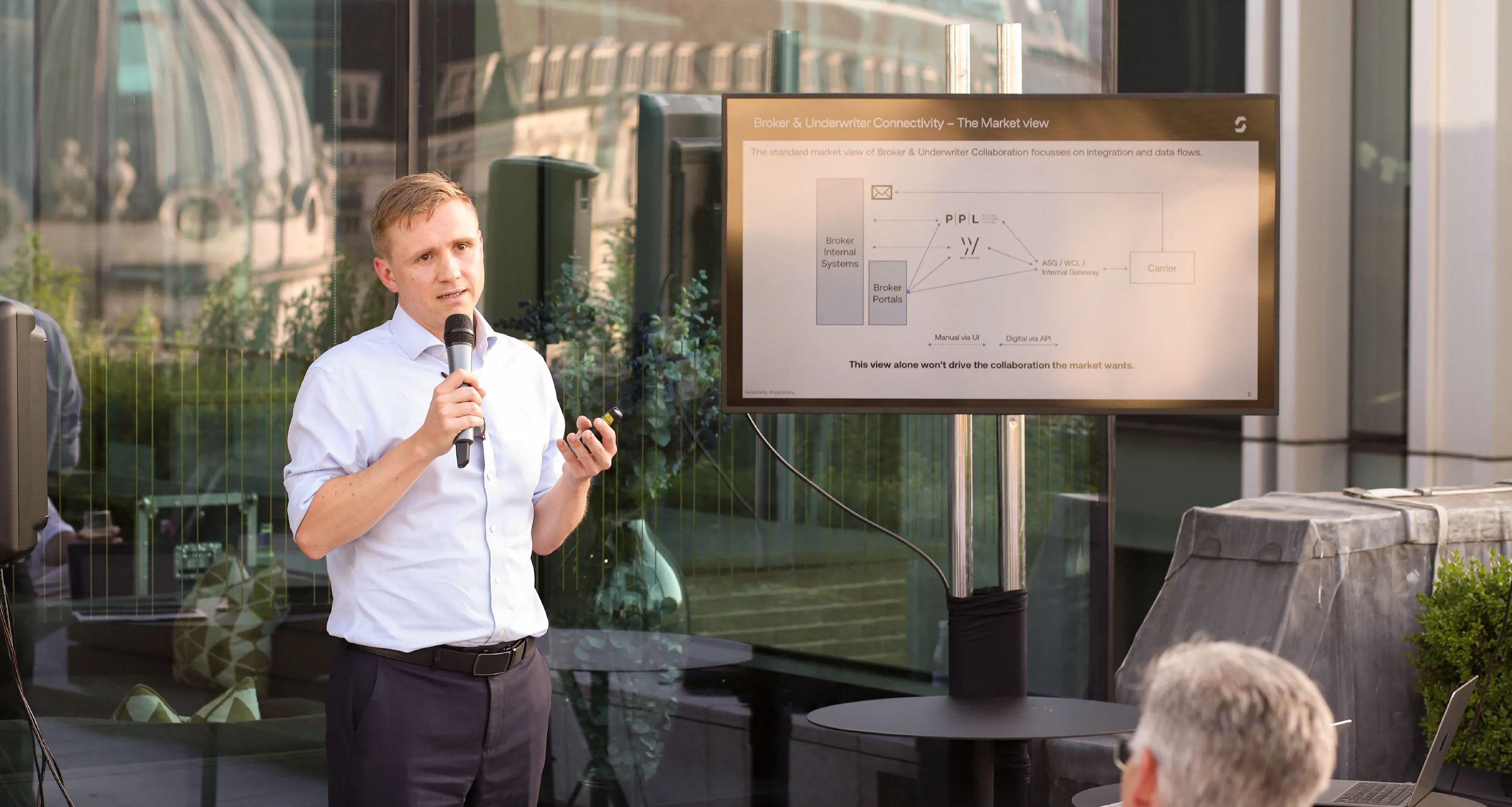
As Lloyd Peters from Send explained, moving data electronically between brokers and insurers removes manual re-keying, but it does not solve the wider operational challenge inside a carrier.
Once a submission enters an insurer, it becomes part of a much larger ecosystem involving appetite assessment, rating, exposure management, sanctions, catastrophe modelling, pricing, workflow orchestration, and multiple specialist teams.
Creating value, therefore, requires far more than digital placement.
It requires connecting these capabilities into a coordinated operating model that allows information to move seamlessly across the underwriting lifecycle.
The panel agreed that underwriting will continue evolving from manual processes towards augmented underwriting, algorithmic decision support, and increasingly portfolio-based management. However, this evolution will only succeed if organisations avoid creating yet another generation of disconnected technology silos.
The next phase of transformation is ecosystem transformation
In my session, I articulated that many organisations have already become digital businesses. They have modernised internal systems, automated workflows, and improved how they manage information within their own organisations.
The next phase of transformation depends on organisations being able to exchange trusted information across company boundaries, regardless of the systems they use.
The market does not need a single platform. It needs interoperability.
Integration is the enablement layer that connects brokers, insurers, underwriting platforms, and market infrastructure, allowing trusted data to move across the ecosystem.
Only when information can flow seamlessly between organisations can automation and AI deliver value across the entire insurance value chain.

Key takeaways
The discussion reinforced that the future of insurance will not be built through end-to-end standardisation.
Fragmentation is not disappearing, and it does not need to.
Instead, the industry's next chapter will be defined by its ability to connect diverse organisations, technologies, and workflows through trusted data, intelligent integration, automation, and AI.
Competitive advantage will increasingly belong to organisations that can collaborate effectively across organisational boundaries, enabling better underwriting, stronger broker-underwriter relationships, and faster, more informed decision-making.
The future of insurance is not one platform or one process.
It is a connected ecosystem where different organisations can work together seamlessly while maintaining the flexibility that has always defined the market.